
Choosing the right speaker system can make a huge difference in how your event, church service, or live performance sounds. Most people don’t need to know every technical detail behind speaker design, but they do need to know one thing: will the sound reach the audience clearly?
That is where the line array vs point source conversation comes in. Both systems can sound excellent when they are used in the right setting. The best choice depends on the size of the space, the shape of the room, the audience layout, the type of event, and the level of coverage you need.
At Pro-Tech, we work with professional sound systems in both live production and permanent installations. That means we are not just looking at what equipment looks good on paper. We are looking at what actually performs well in real spaces, under real conditions, with real audiences.
Quick Answer: What’s the Difference?
A point source speaker sends sound from one main cabinet or speaker location. It is often a strong choice for smaller rooms, shorter coverage areas, private events, meetings, and simpler setups.
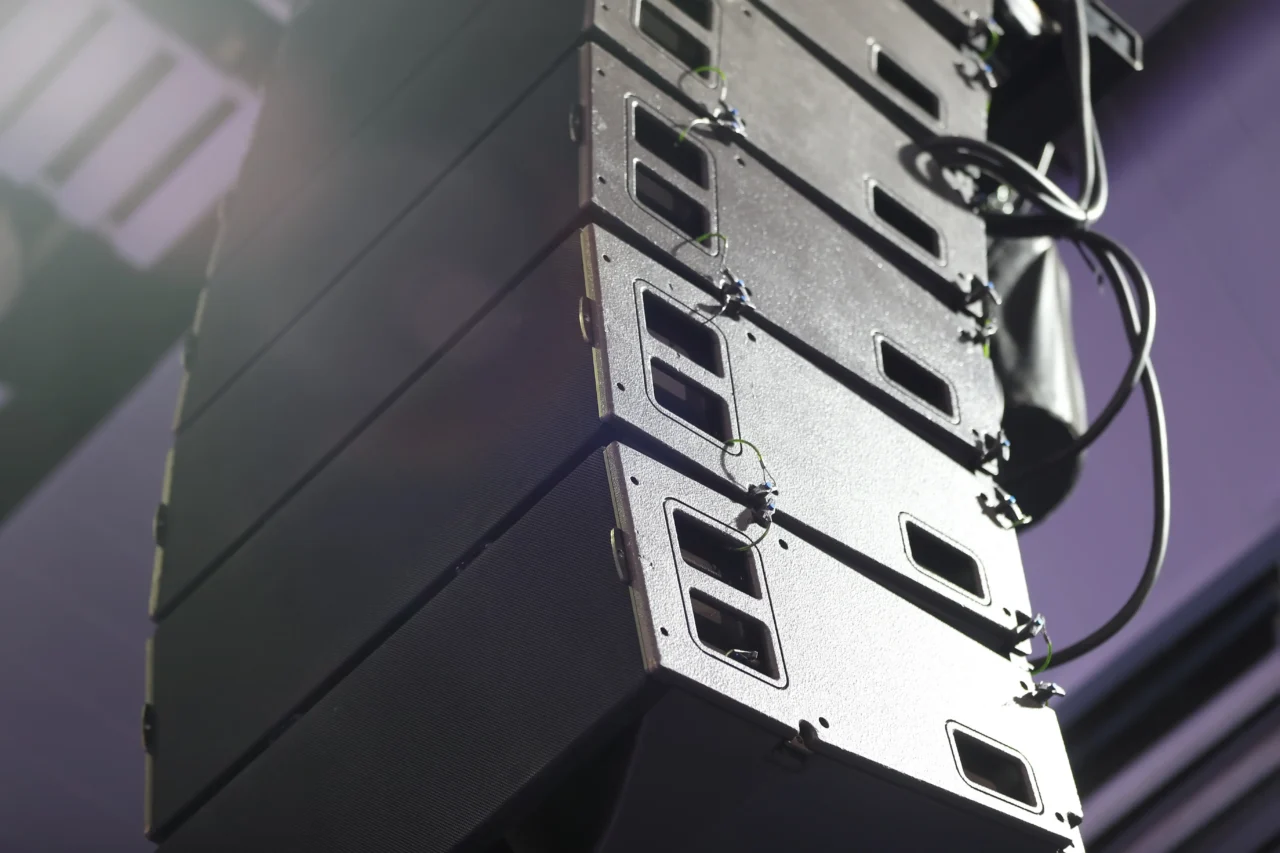
A line array speaker system uses multiple speaker cabinets arranged in a vertical or curved line. This design helps control how sound spreads, making it useful for larger crowds, longer rooms, outdoor stages, theaters, and bigger worship spaces.
In simple terms, point source speakers are usually best when the audience is closer and the setup is more compact. Line arrays are often better when sound needs to travel farther while staying clear and even from front to back. Neither system is automatically “better.” The right choice is the one that fits the space and the job.
What Is a Point Source Speaker?
A point source speaker is the more traditional style of sound system most people picture when they think of a professional speaker. Sound comes from one main cabinet, which makes it a practical choice for smaller spaces, shorter throw distances, and events where the audience area is fairly contained.
Point source systems can still sound excellent when they are placed, powered, and tuned correctly. They are often easier to set up than line arrays, which can make them a good fit for corporate meetings, private events, smaller worship spaces, school programs, and rooms where a large flown system would be unnecessary.
The key is coverage. A point source speaker works best when it can reach the audience evenly without being pushed too hard. When the room gets longer, wider, or more complex, that is when another approach may make more sense.
What Is a Line Array Speaker System?
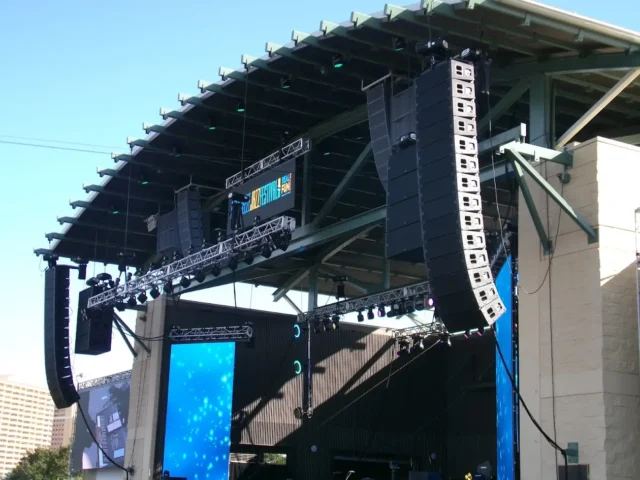
A line array speaker system uses multiple speaker cabinets arranged in a vertical or slightly curved line. You have probably seen them hanging beside large concert stages, in big churches, or at outdoor festivals. That shape is not just for looks. It helps control how sound moves through the space.
Line arrays are designed to carry sound farther while keeping coverage more consistent from the front of the audience to the back. Instead of blasting one area and leaving another struggling to hear, a properly designed line array helps spread sound more evenly across a larger space.
That does not mean every event needs one. Line arrays require planning, proper rigging, tuning, and the right crew behind them. But for larger rooms, outdoor stages, balconies, deep seating areas, and high-energy live music, they can make a major difference in clarity and control.

Line Array vs Point Source: Key Differences
The easiest way to compare line array vs point source speakers is to look at how each system handles space, distance, and coverage. Both can be professional. Both can sound great. The difference is where each one performs best.
| Factor | Point Source Speakers | Line Array Speakers |
| Best For | Smaller rooms, compact events, shorter audience areas | Large crowds, long rooms, outdoor stages, bigger venues |
| Coverage | Strong coverage in a focused area | More controlled coverage over longer distances |
| Setup | Usually simpler and faster to deploy | Requires more planning, tuning, and rigging |
| Budget | Often more cost-effective for smaller needs | Higher investment, but stronger for large-scale coverage |
| Common Uses | Meetings, private events, small churches, smaller venues | Festivals, concerts, large churches, theaters, auditoriums |
| Main Advantage | Simplicity and flexibility | Consistency, distance, and control |
A good sound system is not about choosing the biggest option. It is about choosing the setup that fits the room, the crowd, and the purpose of the event. That is where experience matters.
Why Speaker Choice Matters More Than Volume
A lot of people assume a sound problem can be fixed by turning things up. Sometimes that only makes the problem louder.
The real goal is not volume. It is coverage, clarity, and control. If one section of the room is painfully loud while another section can barely hear, the system is not doing its job. If speech sounds muddy or music feels harsh, more power will not fix the root issue.
Speaker choice affects how sound moves through the space. The right system helps reduce hot spots, dead zones, feedback problems, and listener fatigue. That matters whether you are mixing a festival, leading worship, hosting a conference, or running a theater production.
When a Line Array Makes Sense
A line array may be the right choice when your space or audience needs consistent sound over a larger area. This often includes outdoor concerts, festivals, large churches, theaters, auditoriums, and venues with deep seating.
Line arrays are especially helpful when:
- The audience is large or spread out
- The room is long, wide, or has balconies
- The event is outdoors
- Live music needs power and control
- Speech needs to stay clear from front to back
- The system needs to look clean and professional
The biggest advantage is control. A properly designed line array can help keep sound focused where people are sitting instead of wasting energy on walls, ceilings, or open air.
When Point Source Speakers May Be the Better Fit
Point source speakers are often the smarter choice for smaller spaces or simpler setups. They can deliver excellent sound without the extra complexity of a larger system.
A point source setup may work well for:
- Small or mid-sized rooms
- Shorter audience areas
- Private events and meetings
- Smaller worship spaces
- Community events
- Budget-conscious projects
- Fast setup and teardown
This is where honest planning matters. If a point source system can cover the audience clearly, there is no reason to overbuild. The best sound system is the one that fits the space, supports the event, and performs reliably without unnecessary cost or complication.
How This Plays Out in Real Spaces
Once you understand the difference between line array and point source speakers, the next step is looking at the space itself. The same speaker system will not behave the same way in a sanctuary, a festival field, a theater, or a ballroom. Room shape, ceiling height, audience layout, and acoustics all change the equation.
Churches and Worship Centers
Church sound systems need to support both spoken word and music. The sermon has to be clear, the worship team needs enough power and balance, and the congregation should hear evenly from the front row to the back.
In a larger sanctuary with high ceilings, balconies, or a long seating area, a line array may help deliver more consistent coverage. In a smaller worship space, a well-placed point source system may be the better fit. The goal is not to install the most impressive-looking system. The goal is to help every person hear and participate.

Concerts and Festivals
Outdoor concerts and festival production often push sound systems harder than almost any other environment. There are no walls to help contain the sound, audiences may stretch far from the stage, and wind can affect how sound carries.
This is where line arrays often shine. They help project sound farther while keeping coverage more controlled across large crowds. For smaller stages, side stages, or intimate performances, point source speakers may still be the right call.
 Theaters and Venues
Theaters, auditoriums, and performance venues need sound that supports the production without overwhelming the room. Sightlines, rigging points, stage depth, balconies, and seating angles all matter.
Some venues benefit from a flown line array. Others may need point source speakers, front fills, under-balcony fills, or a mix of several approaches. The best design starts with the room, not the speaker catalog.
Why Professional Design and Tuning Matter
Choosing between line array and point source speakers is only one part of building a good sound system. Placement, tuning, rigging, room acoustics, subwoofer layout, and mixing all affect the final result.
A great speaker system can still sound bad if it is aim
ed poorly, underpowered, overdriven, or fighting the room. That is why professional design matters. The goal is to make the system work with the space, not against it.
Tuning is where the details come together. Engineers measure the room, adjust timing, balance levels, and shape the system so speech stays clear and music feels natural. That kind of work is hard to guess your way through, and it can make the difference between a system that is loud and one that actually sounds right.
Let Pro-Tech Help You Choose the Right Sound System
Whether you are planning a festival, upgrading a worship space, or improving sound in a venue, Pro-Tech
can help you choose the right system for the job. Our team works with professional line array systems, point source setups, installed audio, and live production systems, so we know how to match the equipment to the space.
Tell us what you are working on, and we will help you build a sound system that delivers clarity, coverage, and confidence from the first note to the last word.