Stage size plays a bigger role than most people think. Whether you’re setting up for a concert, a corporate function, or a community event, the right event stage shapes the whole experience. It affects how clearly your audience sees and hears the show, how comfortable your performers feel, and how easily your team can get everything set up and running.
You don’t need to overthink it. Just plan ahead and work with someone who knows what works. The goal is to land on a performance stage that fits just right. Not too cramped. Not too massive. Just solid, dependable staging that supports your event from start to finish.
Quick Reference: Standard Stage Sizes
Not sure what size stage you need? Here’s a quick guide based on common event types and audience sizes:
| Stage Size | Best For |
| Small Stage
(8’x12’, 12’x16’) |
Solo performers, speeches, DJ sets, small indoor events |
| Medium Stage
(16’x20’, 20’x24’) |
Full bands, corporate events, weddings, mid-sized audiences |
| Large Stage
(24’x32’, 40’x40’+) |
Festivals, big concert stages, multi-day events, large outdoor performances |
These are standard stage sizes, but your exact needs may vary based on the number of performers, equipment, and venue layout. If you’re unsure, a quick consultation can help avoid overbuilding or undersizing your event stage.
How to Know What Stage Size You Really Need
If you’re planning an event and aren’t sure what stage size to go with, you’re not alone. The right size depends on a handful of real-world details, not just guesses.
Here’s what to lock in before choosing your stage:
- Type of Event
A music festival and a business conference won’t need the same layout. Concerts usually call for more space to accommodate instruments, lighting, and movement. Corporate or wedding events may need less floor space but more room for screens or podiums. - Number of People On Stage
Are you setting up for one speaker or a 10-piece band? A small stage platform may work for solo acts, but the more people you add, the more square footage you’ll need to keep things from feeling crowded. - Venue Layout & Audience Size
Indoor events in tighter rooms often work with smaller stages. Outdoor events with bigger crowds usually need elevated, larger stages to keep sightlines clear and ensure everyone stays engaged. - Gear & Setup Requirements
Lighting rigs, audio monitors, video screens, podiums—they all take space. Leave room for technicians to move safely and run cables without creating clutter. It’s better to have a little extra room than wish you did mid-show.
Getting this part right saves money, prevents last-minute changes, and sets everyone on and off stage up for success.
Choosing Between Small, Medium, and Large Stage Sizes
Once you understand the demands of your event, choosing a stage size gets easier. Most rental companies offer standard dimensions, and those can usually be scaled up or down depending on your needs.
Small Stage (8’x12’, 12’x16’):
Ideal for solo performers, keynote speakers, or DJs at intimate events. You’ll see this size often at indoor ceremonies, storefront setups, or backyard parties. They’re also great when you need to save space or set up quickly. Just remember, once you add a podium, monitor, or lighting stand, the open space goes fast.
Medium Stage (16’x20’, 20’x24’):
This is the most versatile size range for general events. It fits a full band, a panel of speakers, or a small choir comfortably. Corporate presentations, school performances, and weddings often use stages in this category. They strike a nice balance: enough space to move without feeling too empty or overwhelming.
Large Stage (24’x32’, 40’x40’+):
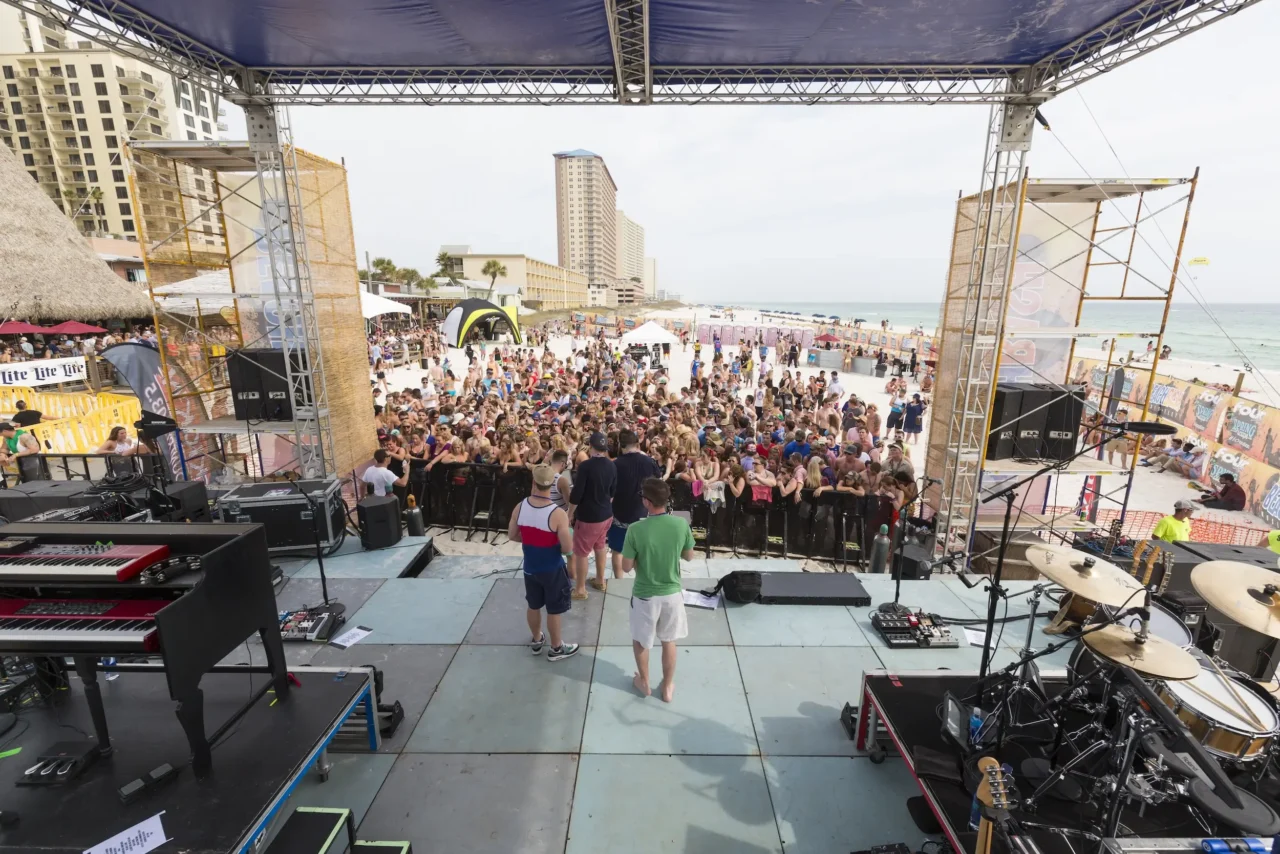
Big concert stages, city festivals, and large outdoor productions need space for backline gear, multiple performers, and clear audience sightlines. These stages aren’t just for the performers. They’re for your entire crew. You’ll need room to accommodate lighting rigs, video walls, risers, and sometimes even vehicles or props. If the crowd is large, the stage has to be too, both for visibility and safety.
Need More Flexibility? Modular Staging Might Be the Answer
Not every event fits neatly into one size. The good news is, most professional stage platforms are modular, meaning you can build out extra space or adjust dimensions to fit your venue or lineup. This is especially helpful when planning multi-day events, variable weather contingencies, or shared spaces where the layout might change. A modular approach lets you stay flexible without overcommitting.
Indoor vs. Outdoor Stages
The size of your stage isn’t just about who or what goes on it. It’s also about where you’re setting it up. Indoor and outdoor venues come with very different needs, and understanding those early can save you serious hassle.
- Indoor Stages: Indoor venues often have limitations you can’t ignore, like ceiling height, room size, and floor load capacity. You may be working around permanent fixtures, low-hanging lights, or tight doorways. Small to medium stages are usually a better fit here. And depending on the flooring, you may need to consider how the stage distributes weight or if extra protection is required underneath.
- Outdoor Stages: With open space comes more freedom, but also more responsibility. Outdoor stages can go big, and often need to, especially for concerts and festivals where audience size and gear demands are higher. But you also need to plan for the elements: weather-resistant platforms, roofing systems, wind-rated truss structures, and proper anchoring are non-negotiable. A big concert stage might look impressive, but if it isn’t built to handle wind or rain, you’re looking at a safety risk.
How Pro-Tech Helps You Choose the Right Stage
At Pro-Tech, we’ve been building stages for more than 25 years, from small church festivals to large multi-day concerts. We don’t just rent out generic platforms. We own our staging gear in-house, including portable stage decks, truss systems, roofing structures, and the accessories that make it all run smoothly. That means faster turnaround, no middleman delays, and total control over quality.
Most importantly, we work with you to design a stage setup that fits your space, budget, and production goals. Whether you’re hosting a high-energy band or a polished corporate event, we’ll help you choose staging that looks good, performs reliably, and makes life easier for your crew.
Need the Right Stage for Your Event?
Contact Pro-Tech to get started today.